
"This court cannot say that less charges should not be levied by them. After all, the consumers should be benefited. Court cannot exercise this power," it said.

By 2025, Uber projects that 25,000-30,000 cars -- or 12 to 16 per cent of vehicle additions -- would be EVs, reports Surajeet Das Gupta.

The Ministry of Heavy Industries has approved 11 electric vehicle (EV) manufacturers, including Ather Energy, Bajaj Auto, Hero MotoCorp, Ola Electric, and Mahindra, to receive incentives under the recently introduced Electric Mobility Promotion Scheme (EMPS) 2024. "A total of 11 firms have been granted approval under the EMPS, with several more under consideration," informed a senior official of the ministry to Business Standard. The scheme aims to sustain the growth in EV sales, replacing the Faster Adoption and Manufacturing of Electric Vehicles - II (FAME-II) scheme.

The Ministry of Heavy Industries announced on Tuesday that it has received bids from seven players for the re-bidding tender of the 10 gigawatt-hour (Gwh) tranche of the Advanced Chemistry Cell (ACC) manufacturing production-linked incentive (PLI). "The list of bidders (in alphabetical order) who have submitted bids in response to this tender are ACME Cleantech Solutions, Amara Raja Advanced Cell Technologies, Anvi Power Industries, JSW Neo Energy, Reliance Industries, Lucas TVS, and Waaree Energies for a cumulative capacity of 70 Gwh," the ministry said in a statement. After the re-auctioning for the manufacturing unit was announced in January, the pre-bid meeting was held on February 12, the ministry said.

I am happy I didn't knock anyone down, driving recklessly or trying to show off. However, in one instance of road rage (the consequence of arguing with a driver who disrespected my right to cross the road peacefully) I did find a man in a SUV taking his anger out on me by driving his vehicle over my feet, recalls Shyam G Menon.

Ola, Uber cabs face hurdles to operate legally in the capital.

Foreign investment in India's start-ups has plummeted 72 per cent to $4.58 billion so far, from $16.2 billion during the same period last year.
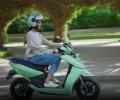
'Our expectations are that we will be able to double our market share from 14-15 per cent currently to around 30 per cent by the end of the financial year.'

The government is planning to extend the electronic modes of tax payment to its own payments platform, Unified Payments Interface (UPI), credit cards of banks, or even a mobile wallet like Paytm.

The ban on taxi aggregators can put at risk investments of at least Rs 2,000 crore (Rs 20 billion), made by private equity (PE) and venture capital (VC) investors.
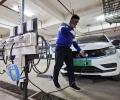
New Delhi's timing couldn't have been worse, both for India's fledgling electric vehicle (EV) sector and prospective electric bike buyers. It was hard to miss the perfect storm brewing for India's EV industry since early 2022. On one hand, you had several accidents involving battery fires that unnerved consumers; on the other, uncertainty had crept in over subsidies.
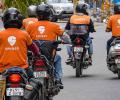
Food delivery major Swiggy has received approval from its shareholders for a $1.25 billion initial public offering (IPO), according to filings made with the Registrar of Companies sourced by Tofler. The Bengaluru-based firm plans to raise as much as Rs 3,750 crore (around $450 million) via a fresh issue and up to Rs 6,664 crore (around $800 million) through an offer-for-sale (OFS) component, the filings stated.

Looks at 100 km ride on single charge, ideal for big cities
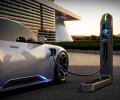
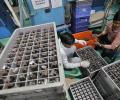
With a million-odd electric vehicles (EVs) - two-wheelers, e-rickshaws, buses and passenger cars - expected to hit the road this calendar year, the shift from gasoline-powered vehicles has become irreversible. Now the question is whether the supply chain is ready for this shift. Key components - the high-powered lithium-ion battery and the cells which go with it, the electric motor, and the electronics powered by chips - account for nearly 60 per cent of the cost of an EV.
The new four-wheeler (4W) electric vehicle (EV) policy may spur the entry of global majors. The manufacturing policy cuts Customs duty to 15 per cent, given a minimum investment commitment. It calls for a minimum investment of Rs 4,150 crore (about $500 million) for making electric four wheelers (e-4Ws), with manufacturing to commence within three years of approval.

These days, one frequently hears of consolidation, rollback and even closure from the start-up world.

GST impact: Higher lease payouts may hit airlines, cab aggregators.

People in India haven't seen what happens if the environment gets sour, the Softbank vice-chairman said.

SoftBank-backed Inmobi has fired about 50-70 people on performance metrics. According to a source, the employees impacted are from Inmobi and the firm's lock screen-based content provider Glance. This comes even as the company announced that it will skip increments for CY23 and also undertake recruitment only when required. The Inmobi group has a total headcount of 2,600.
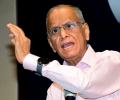
Infosys co-founder N R Narayana Murthy stirred a storm on X when he said young people should work 70 hours a week to level up the country's productivity. In a conversation with former Infosys CFO Mohandas Pai in the inaugural episode of 3one4 Capital's podcast 'The Record,' Murthy said that youngsters should put extra hours at work to compete with leading economies. "India's work productivity is one of the lowest in the world. Unless we improve our work productivity...we will not be able to compete with those countries that have made tremendous progress," he said, comparing India with China, Japan and Germany.

The grievance redressal mechanism of many big e-commerce players is not up to the mark as the number of complaints received by the National Consumer Helpline has risen sharply over the last four years, Consumer Affairs Secretary Rohit Kumar Singh said on Thursday. Addressing an event organised by the Public Affairs Forum of India (PAFI), Singh said the number of complaints registered on the National Consumer Helpline (NCH) has gone up to 90,000 in November compared to 40,000 in the same month last year. "Four years back, the number of complaints pertaining to e-commerce transactions was 8 per cent of the total complaints.

Funding winter and corporate governance woes separated the men from the boys in the country's startup space in 2023 that saw funds into the segment tapering to just around $8 billion. All said, investors are hopeful of strong growth of the maturing startup ecosystem in the new year. Edtech and health tech segments that grew exponentially during the pandemic plunged into an abyss of financial uncertainties, with several firms shuttering their business, and valuation of prominent players like BYJU'S and PharmEasy plummeting 85-90 per cent.
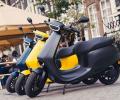
India's incumbent two-wheeler players, led by TVS Motors, are flexing their muscles, having crossed the registration of 10,000 electric two-wheelers for the first time in November this year, according to data from Vahan, the website of the ministry of road transport and highways. The two key incumbent players, TVS Motors and Bajaj Auto, now account for around 15 per cent share of registrations in the month of November. The number will only go up with Hero MotoCorp now joining the bandwagon with its Vida range of electric scooters.

Tamil Nadu is leaving no stone unturned in marketing its upcoming global investors meeting on January 7 and 8. While business veterans are promoting the positives of the state's industrial climate through the 'Titans of Tamil Nadu" campaign, the state is narrating the human stories behind its robust industrial growth via the 'One Trillion Dreams' campaign. Among the industry bigwigs, who are showcasing Tamil Nadu to the world through this mega marketing initiative include Venu Srinivasan of TVS Motor Company, K M Mammen of MRF Ltd, Pratap Reddy of Apollo Hospitals, P R Venketrama Raja of Ramco Group, Mallika Srinivasan of TAFE; and Vellayan Subbiah of Murugappa Group.

The recovering valuations, will lead to enhanced optimism among investors about funding startups.

Even as India overtakes Japan in automotive sales in 2022, moving to third place for the first time, oddly enough the country's biggest motor show is going to see some big hitters give it a clear miss. Some prominent automotive brands have cited high event costs, negligible returns on investment, poor event management, and unfavourable location as reasons for their reluctance to participate. Major pure-play electric two-wheelers, too, are riding past this year's edition of the Auto Expo.
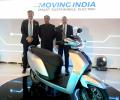
With its new premium Primus and Ampere NXG, it is targeting buyers seeking a faster and more stylish ride

After a recent fall in profit, Masayoshi Son of SoftBank announced that the Japanese tech investor will look at dramatic cost-cutting. Before he does that, investments in India for calendar year 2022 (CY22) will fall radically, observed sources in the know. Last year, the company had invested around $3.2-3.5 billion in the Indian start-up ecosystem - almost 10 per cent of the total investment the sector received. For CY22, the investments may not even touch $1 billion.

How will the government's decision to demonetise Rs 500 and Rs 1,000 notes help curb the creation and flow of black money into the Indian economy?

Of the 15 car manufacturing companies in India, eight have a market share of below 2 per cent, raising questions about their long-term future in a competitive market that has already seen Ford Motors and General Motors slam the door on India.

'The success of one or two IPOs does not dictate whether the upcoming IPOs will be successful or not, but it certainly indicates that the markets and investors are enthusiastic about startup IPOs.'
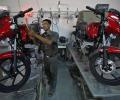
Bajaj Auto's market capitalisation (market cap) hit Rs 2 trillion mark for the first time. The stock of the two and three-wheeler major rallied 6 per cent to hit a new high of Rs 7,420 on the BSE in Tuesday's (January 9) intraday trade after its board approved Rs 4,000 crore share buyback at Rs 10,000 per share. The stock ended the day at Rs 7,093.75, up 1.55 per cent and its market cap a shade above Rs 2 trillion.
Electric two-wheelers have zipped past the half-a-million registration mark and achieved a market penetration of 4 per cent at the fag end of Calendar 2022, according to data released by VAHAN. According to VAHAN data for the year (until December 27), 560,000 two-wheelers were registered in the country, up a staggering fourfold over 2021, when only 136,000 were registered, and when electric vehicle penetration was a mere 1.05 per cent. The total number of two-wheelers (internal combustion engine, or ICE, and electric) registered so far in 2022 stands at 14.5 million, up only 12.7 per cent over the previous calendar year.

The incident took place on Saturday inside the Pragati Maidan tunnel when the victims were going towards Gurugram in a cab to deliver the money.

The two-wheeler segment is, however, still far from its H1FY19 peak of 9.7 million units

From the customer point of view too, LFP batteries are safer and offer a longer life.

US hedge fund Tiger Global and Japanese investment giant SoftBank have trimmed their investments in Indian start-ups by over a third - from $3.8 billion in the second half of 2021 to a mere $1.08 billion in H1 2022, according to data from Venture Intelligence. While SoftBank's investments in India dropped from $1.9 billion in H2 2021 by more than a fifth to only $0.33 billion in H1 2022, that of Tiger Global fell from $1.92 to $0.74 billion in the same period. Private equity (PE) fund trackers point out that this year most of the deals that Tiger Global has invested in are in the early stage (up to series D), and only a few are in the series E and above.

Companies making electric two-wheelers, through their association Society of Manufacturers of Electric Vehicles (SMEV), have taken on the Department of Heavy Industries (DHI), saying they did not get subsidies for even half the mandated 1 million units they manufactured. Subsidies are given under Faster Adoption and Manufacturing of Hybrid and Electric Vehicles 2 (FAME II). In a petition to the parliamentary standing committee on industry energy and estimates, the SMEV said the department had done an "accounting error" by showing that it (the department) was close to achieving the mandated target by including sales of the EVs that were "not funded" under the scheme.
With increasing incidents of electric two-wheelers catching fire, Union minister Nitin Gadkari on Thursday said the companies found negligent will be penalised and a recall of all defective vehicles will be ordered after receiving the report of an expert panel that has been formed to enquire into the matter. In a series of tweets, Gadkari said several mishaps involving electric two-wheelers have come to light in the last two months. "We have constituted an expert committee to enquire into these incidents and make recommendations on remedial steps.

The state is also the biggest market for TVS, another incumbent player, and together with Bajaj Auto, they accounted for 88 per cent of Maharashtra's total electric scooter sales last month. As many as 8,417 units were sold in Maharashtra in September. Bajaj Auto's contribution was 4,048 vehicles and that of TVS was 3,389, according to model- and state-wise data from the Society of Indian Automobile Manufacturers (Siam).
